




Optimizing OR Workflow Starts with the Right Equipment Layout
Give every cart, stand, and shelf a job to do — and a place to do it. Here’s how smart placement and durable stainless steel keep an OR moving.
A well-placed piece of equipment isn’t just tidy — it’s one less thing standing between your team and the next step.
Ask any OR team what slows a case down and "equipment" is rarely the first answer. But look closer, and it's often not the equipment itself — it's where it's parked. A cart in the wrong spot, a Mayo stand too far from the field, a kick bucket lurking where someone's about to step: small friction points that add up fast.
Layout is the quiet variable behind every smooth turnover. Get it right, and supplies stay within reach, pathways stay clear, and the room simply works the way your team already does. Pair that layout with stainless steel equipment built for clinical environments, and you've got a setup that holds up to daily procedures, transport, and turnover — case after case.
Start with the workflow, not the furniture
Here's the trap: filling empty floor space feels productive, but it's the wrong starting point. The better question isn't "where does this fit?" — it's "what actually happens here, in what order?" Map the real sequence of a case — people, instruments, supplies, equipment — and the right layout starts to reveal itself.
A practical walkthrough should look at:
- Where instruments and supplies get prepped and staged
- What absolutely needs to stay within arm's reach of the field
- How clean supplies and used items travel in and out of the room
- Where waste receptacles can live without becoming a tripping hazard
- Which pathways must stay clear for staff, carts, and emergency access
This workflow-first mindset naturally sorts the room into functional zones — prep, active procedural support, transport, waste, and storage. The goal was never to fit more into the room. It's to make everything already in it easier to use, without stepping on movement or sightlines.
Give every piece of equipment a job — and an address
Vague placement creates vague habits. When each item has a defined role and a consistent home, your team stops hunting and starts working. Setup becomes something people can repeat on autopilot, case after case, shift after shift.
Mayo stands: immediate access, right at the point of use
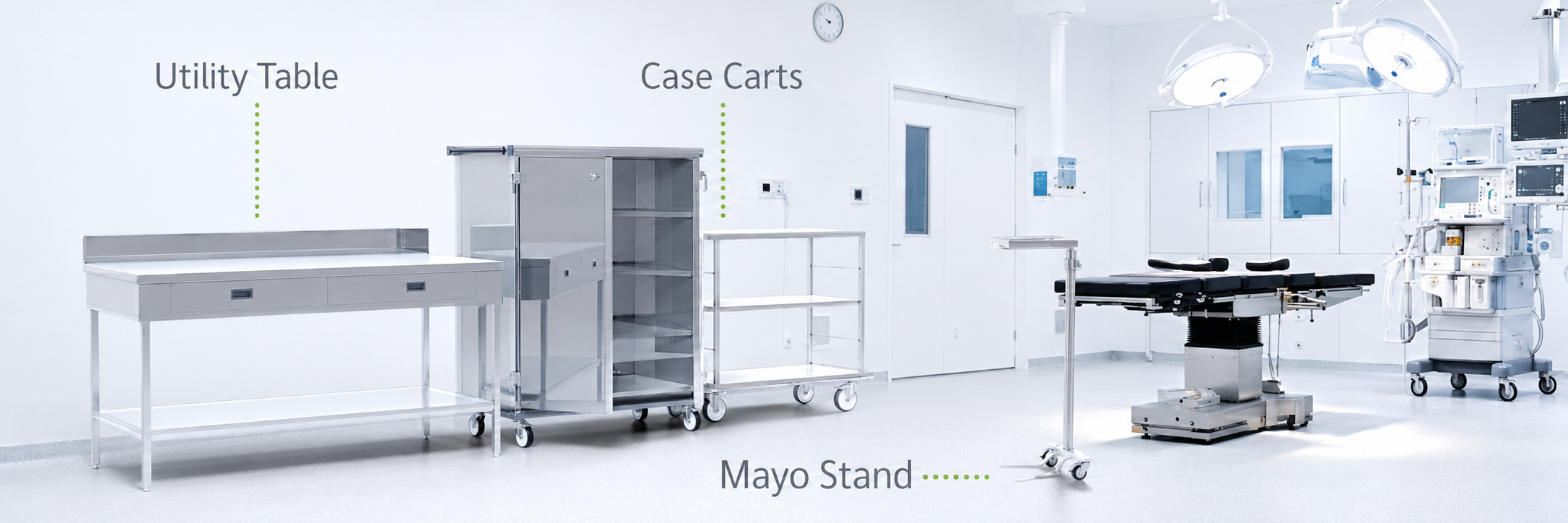
The Mayo stand is prime real estate — a compact, adjustable surface that needs to be exactly where the action is, without getting in the way of it. Mobile, height-adjustable designs let the working surface flex with the procedure. Imperial Surgical Mayo stands are built from seamless stainless steel tubing with polished stainless steel trays, made for the pace of clinical and OR use.
Utility tables: more surface, without the sprawl
Every OR needs a little extra elbow room — a surface for staging supplies, organizing equipment, or handling instrument-related tasks without crowding the main field. Tuck utility and inspection tables along the edge of the active work zone, and you get usable space while keeping central pathways clear. Add shelves, drawers, overshelves, or mobile configurations, and that same table becomes organized storage too — no second work surface required.
Case carts: transport with a plan
Case carts are the workhorses moving supplies, instruments, and containers between areas — but only if they're actually parked somewhere sensible. Closed case carts keep contents contained with flexible internal shelving; open case carts trade that for quick visibility and grab-and-go access. Either way, plan the parking spot in advance, so doors, shelves, and handles can open freely without blocking a doorway or a walking path.
Kick buckets: close enough to help, out of the way enough to not hurt
Nobody wants a floor-level obstacle mid-procedure — but waste receptacles still need to be within reach. The fix is a defined spot near the relevant work zone that keeps the bucket accessible without turning it into a hazard underfoot. Mobile stainless steel receptacles with stable frames and casters make it easy to reposition as the room setup shifts.
Stainless steel shelving: don't forget you have walls
Floor space fills up fast — vertical space rarely gets the same attention, and that's a missed opportunity. Shelving moves supplies off work surfaces and cuts down on floor-level clutter. Keep the frequently used items easy to spot and reach; push the rest outside the immediate procedure zone. Clear labels, defined stock locations, and enough spacing to actually clean and inspect the area round out a shelving system worth having — always selected and installed according to facility requirements, item weight, and applicable infection prevention policies.
Why stainless steel earns its place in the OR
Stainless steel shows up everywhere in clinical equipment for a reason — it brings strength, durability, and a finish that can keep pace with a demanding environment. Fully welded, polished construction means fewer hard-to-reach joints and a sturdier surface overall. Add mobility, and that same equipment can adapt to new setups, cleaning routines, and workflow changes as they come up.
A practical checklist for reviewing your OR layout
Before calling a layout final, walk the room the way your team actually experiences it — prepping, using, moving, and cleaning every piece in it. Ask yourself:
- Are frequently used instruments and supplies located near the point of use?
- Can staff move between work zones without steering around parked carts or receptacles?
- Can case cart doors and shelves open fully in their designated staging area?
- Are mobile equipment brakes and controls easy to reach?
- Are kick buckets and other floor-level items visible and out of primary walking paths?
- Does shelving keep supplies organized without overloading the immediate procedure zone?
- Can every equipment surface and surrounding floor area be reached for routine cleaning?
- Can the layout adjust for different procedures without creating congestion?
Organization is part of the equipment strategy
Optimizing OR workflow was never just about adding more equipment to the room. It's about choosing the right equipment — and giving every single piece a deliberate place to live. Mayo stands, utility tables, case carts, kick buckets, and stainless steel shelving each carry their own stage of the day's work. Arrange them around how your team actually moves, and the room stops fighting you back.
Build an OR environment around the way your team works.
Discover Imperial Surgical Stainless Steel OR Solutions