




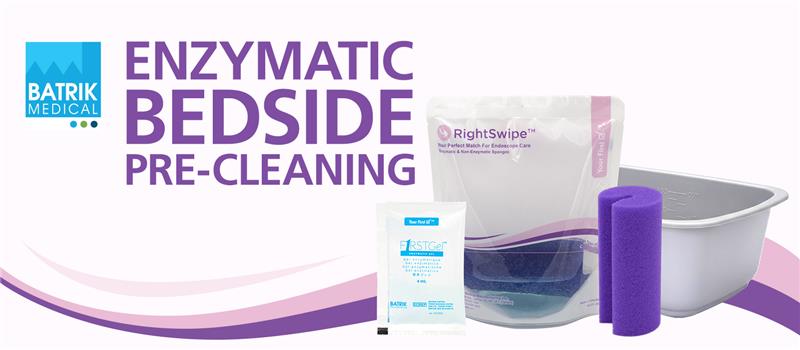
Elevating Patient Safety Starts at Bedside
In modern healthcare, infection prevention is no longer confined to the reprocessing room, it begins the moment a procedure ends. One of the most critical, yet often underestimated, steps in this process is point-of-use pre-cleaning.
Bedside enzymatic pre-cleaning is not optional, it is essential to ensuring safe, effective, and compliant instrument reprocessing.
The Hidden Risk of Delayed Pre-Cleaning
Immediately after a procedure, organic material such as blood, mucus, fats, and proteins begins to dry on instruments and within internal channels. This process can occur within minutes, making timely intervention critical.
Once dried, these soils:
- Become significantly harder to remove
- Increase the risk of biofilm formation
- Lead to failed inspections and reprocessing delays
- Contribute to long-term instrument damage
If not addressed properly, residual contamination may allow microorganisms to survive cleaning and disinfection—raising the risk of healthcare-associated infections (HAIs).
Why Water Alone Isn’t Enough
A common misconception is that rinsing with water is sufficient during pre-cleaning. In reality:
- Water only removes loose debris
- It does not break down proteins or fats
- Residual soil remains inside channels and surfaces
This incomplete cleaning increases:
- Rewash rates
- Inspection failures
- Wear and tear on valuable equipment
The Power of Immediate Enzymatic Action
Enzymatic solutions are specifically designed to actively break down organic material at the molecular level. When applied immediately at bedside, they initiate the cleaning process before soil has a chance to dry or harden.
This early intervention:
- Reduces overall bioburden
- Protects internal channels of endoscopes
- Improves downstream cleaning efficiency
- Supports consistent and repeatable workflows
Clinical and Operational Benefits
Implementing enzymatic bedside pre-cleaning delivers measurable improvements across both patient safety and operational performance:
- Reduced risk of biofilm formation
- Improved inspection pass rates
- Decreased manual cleaning time
- Faster instrument turnaround
- Lower repair and replacement costs
- Reduced risk of HAIs
These benefits translate into safer outcomes for patients and more efficient workflows for healthcare teams.
Standardization Through Bedside Kits
One of the biggest challenges in clinical environments is maintaining consistency, especially under time pressure.
Pre-measured enzymatic bedside kits help solve this by:
- Eliminating dilution errors
- Reducing missed steps
- Standardizing processes across staff and departments
- Supporting compliance with best practices
By simplifying execution, these kits ensure that critical steps are performed correctly—every time.
A Guideline-Aligned Best Practice
Leading infection prevention and endoscopy organizations consistently emphasize the importance of immediate point-of-use pre-cleaning using enzymatic solutions.
This step is recognized as a critical control point in the reprocessing workflow—protecting:
- Patients
- Healthcare professionals
- High-value medical equipment
Effective reprocessing doesn’t start in the sterile processing department—it starts at bedside.
By adopting enzymatic point-of-use cleaning, healthcare facilities can:
- Strengthen infection prevention protocols
- Improve operational efficiency
- Extend the lifespan of their instruments
Most importantly, they can deliver safer care—right from the very first step.